Buy marketing-online.eu ?
We are moving the project
marketing-online.eu .
Are you interested in purchasing the domain
marketing-online.eu ?
domain@kv-gmbh.de · 0541-91531010
Buy marketing-online.eu ?
What is the difference between frequency modulation and amplitude modulation?
Frequency modulation (FM) and amplitude modulation (AM) are two different methods used in radio broadcasting to carry a signal. The main difference between the two is how they vary the carrier wave to transmit information. In AM, the amplitude of the carrier wave is varied in proportion to that of the input signal, while in FM, the frequency of the carrier wave is varied. FM is known for its better sound quality and resistance to noise, while AM is simpler and has a longer range. **
What is the difference between amplitude modulation and frequency modulation?
Amplitude modulation (AM) is a method of encoding information on a carrier wave by varying its amplitude, while frequency modulation (FM) encodes information by varying the frequency of the carrier wave. In AM, the amplitude of the carrier wave is directly proportional to the amplitude of the input signal, whereas in FM, the frequency of the carrier wave is varied in proportion to the amplitude of the input signal. FM is less susceptible to noise and interference compared to AM, making it a more reliable method for transmitting information over long distances. **


Similar search terms for Modulation
Top-Angebote
Products related to Modulation:
-
StayWell LCD Digital Skin Detector Pen Face Skin Tester, Smart Water Oil Fluorescent Content Facial Moisture Analyzer Skin Care LCD Digital Skin Detector Pen Face Skin Tester, Smart Water Oil Fluorescent Content Facial Moisture Analyzer Skin CareUnlock Your Best Skin Ever Experience precision skin analysis at home with the bold, clear LCD Digital Skin Detector Pen. No more guessingthis smart device measures moisture, oil balance, elasticity, and even detects harmful fluorescent agents in...44,97 $*Shipping: 0,00 $Secure redirect to the provider
-
HARPERCOLLINS Donald Miller 3 Book Collection Set – Business Made Simple, Marketing Made Simple & How to Grow Your Small Business Entrepreneurship & Marketing GuiDonald Miller Collection 3 Books Set (How to Grow Your Small Business, Business Made Simple, Marketing Made Simple): How to Grow Your Small Business: Speak to the heart of your target audience and create a movement around your mission or campaign through this comprehensive, step-by-step approach to crafting messages that resonate. Donald Miller, author of the bestselling Building a StoryBrand, has helped thousands of individuals, corporations, and justice-oriented organizations turn vision into action using the organized, easy to implement communication framework outlined in these pages. Business Made Simple: Donald Miller knows that business is more than just a good idea made profitable it s a system of unspoken rules, rarely taught by MBA schools. If you are attempting to profitably grow your business or career, you need elite business knowledge knowledge that creates tangible value. Even if you had the time, access, or money to attend a Top 20 business school, you would still be missing the practical knowledge that propels the best and brightest forward. Marketing Made Simple: Donald Miller, is a must-have for any marketing professional or small business owner who wants grow their business.It will teach you how to create and implement a sales funnel that will increase traffic and drive sales. Every day, your company is losing sales simply because you do not have a clear path to attract new customers. You’re not alone. Based on proven principles from Building a StoryBrand , this 5-part checklist is the ultimate resource for marketing professionals and business owners as they cultivate a sales funnel that flows across key customer touchpoints to effectively develop, strengthen, and communicate their brand’s story to the marketplace.18,99 £*Shipping: 2,99 £Secure redirect to the provider
-
Huddly Canvas Whiteboard Content Camera KitHuddly Canvas whiteboard content camera kit for meeting rooms. The camera mounts above a whiteboard and captures its contents so they can be shared clearly with remote participants in video calls.1003,49 £*Shipping: 0,00 £Secure redirect to the provider
-
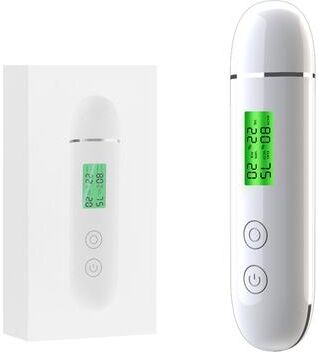
GlowBake Advanced Skin Tester, Face Skin Moisture & Oil Content Analyzer Advanced Skin Tester, Face Skin Moisture & Oil Content AnalyzerDiscover your skins true condition with our advanced Skin Tester a compact yet powerful face skin analyzer designed to measure moisture, oil content, skin water, cheek elastic quality, and even estimate skin age in seconds. Ideal for home use or pro...27,97 $*Shipping: 0,00 $Secure redirect to the provider



-
How does modulation work?
Modulation is the process of varying a carrier signal's properties, such as its amplitude, frequency, or phase, in order to encode information onto it. This allows the carrier signal to carry the information over a communication channel. For example, in amplitude modulation (AM), the amplitude of the carrier signal is varied in accordance with the information signal. At the receiving end, the modulation is reversed through demodulation, allowing the original information to be recovered. Modulation is a fundamental concept in communication systems, allowing for the transmission of information over long distances. **
-
What is the meaning of digital PWM (Pulse Width Modulation)?
Digital PWM (Pulse Width Modulation) is a method used to control the amount of power delivered to a device by rapidly switching it on and off. The width of the on-time (duty cycle) determines the average power delivered to the device. In the digital context, PWM is achieved using digital signals and is commonly used in microcontrollers and digital signal processors to control the speed of motors, brightness of LEDs, and other applications requiring variable power control. This method allows for precise and efficient control of power delivery in digital systems. **
-
What are the characteristics of modulation?
Modulation is the process of varying a carrier signal's properties, such as amplitude, frequency, or phase, in order to transmit information. The characteristics of modulation include the ability to encode information onto a carrier signal, allowing for efficient transmission over long distances. Modulation also enables multiple signals to be transmitted simultaneously over the same medium, known as multiplexing. Additionally, modulation allows for the signal to be easily demodulated and the original information to be recovered at the receiving end. **
-
What is the project Pulse Width Modulation?
Pulse Width Modulation (PWM) is a technique used to encode a message into a pulsing signal. It involves varying the width of the pulse while keeping the frequency constant. This method is commonly used in electronic devices to control the power supplied to electrical devices, such as motors, LEDs, and speakers. By adjusting the duty cycle of the pulse, PWM allows for precise control over the output voltage or current, making it an efficient way to regulate the speed or intensity of various components. **


What is the exact difference between source coding and channel coding in digital modulation?
Source coding and channel coding are two different processes in digital modulation. Source coding is the process of compressing the data to reduce the amount of information that needs to be transmitted. It aims to remove redundancy and irrelevant information from the source data. On the other hand, channel coding is the process of adding redundancy to the data before transmission in order to make it more resilient to errors that may occur during transmission. It aims to protect the data from noise and interference in the communication channel. In summary, source coding reduces the amount of data to be transmitted, while channel coding adds redundancy to protect the data during transmission. **
How can pulse width modulation be explained simply?
Pulse width modulation (PWM) is a method used to control the amount of power delivered to a load by varying the width of the pulse signal. In simple terms, PWM works by turning the power on and off at a fast rate, with the ratio of on-time to off-time determining the average power delivered. By adjusting this ratio, PWM can effectively control the speed of motors, brightness of LEDs, and other parameters in electronic systems. **
Top-Angebote
Products related to Modulation:
-
No Marketing Systems Wood Corner Desk"The corner desk measures 42"" X 28"" X 30"" And Weighs 42 lbs. Arrives with only minimal Assembly required. Comfortably fitting in any home, studio, apartment, and office, The small corner writing desk maximizes space in compact rooms."257,04 $*Shipping: 0,00 $Secure redirect to the provider
-
Uplift Essentials Classic Wooden Shut The Box Dice Game 4 Player Strategy Board For Family & Social Gatherings multicolorBring a touch of traditional pubstyle fun to your home with this classic wooden dice game. Designed for up to four players, this dice board game is a fastpaced test of strategy and math that is easy to learn but difficult to master. Crafted from...60,97 $*Shipping: 0,00 $Secure redirect to the provider
-
StayWell LCD Digital Skin Detector Pen Face Skin Tester, Smart Water Oil Fluorescent Content Facial Moisture Analyzer Skin Care LCD Digital Skin Detector Pen Face Skin Tester, Smart Water Oil Fluorescent Content Facial Moisture Analyzer Skin CareUnlock Your Best Skin Ever Experience precision skin analysis at home with the bold, clear LCD Digital Skin Detector Pen. No more guessingthis smart device measures moisture, oil balance, elasticity, and even detects harmful fluorescent agents in...44,97 $*Shipping: 0,00 $Secure redirect to the provider
-
HARPERCOLLINS Donald Miller 3 Book Collection Set – Business Made Simple, Marketing Made Simple & How to Grow Your Small Business Entrepreneurship & Marketing GuiDonald Miller Collection 3 Books Set (How to Grow Your Small Business, Business Made Simple, Marketing Made Simple): How to Grow Your Small Business: Speak to the heart of your target audience and create a movement around your mission or campaign through this comprehensive, step-by-step approach to crafting messages that resonate. Donald Miller, author of the bestselling Building a StoryBrand, has helped thousands of individuals, corporations, and justice-oriented organizations turn vision into action using the organized, easy to implement communication framework outlined in these pages. Business Made Simple: Donald Miller knows that business is more than just a good idea made profitable it s a system of unspoken rules, rarely taught by MBA schools. If you are attempting to profitably grow your business or career, you need elite business knowledge knowledge that creates tangible value. Even if you had the time, access, or money to attend a Top 20 business school, you would still be missing the practical knowledge that propels the best and brightest forward. Marketing Made Simple: Donald Miller, is a must-have for any marketing professional or small business owner who wants grow their business.It will teach you how to create and implement a sales funnel that will increase traffic and drive sales. Every day, your company is losing sales simply because you do not have a clear path to attract new customers. You’re not alone. Based on proven principles from Building a StoryBrand , this 5-part checklist is the ultimate resource for marketing professionals and business owners as they cultivate a sales funnel that flows across key customer touchpoints to effectively develop, strengthen, and communicate their brand’s story to the marketplace.18,99 £*Shipping: 2,99 £Secure redirect to the provider
-
What is the difference between frequency modulation and amplitude modulation?
Frequency modulation (FM) and amplitude modulation (AM) are two different methods used in radio broadcasting to carry a signal. The main difference between the two is how they vary the carrier wave to transmit information. In AM, the amplitude of the carrier wave is varied in proportion to that of the input signal, while in FM, the frequency of the carrier wave is varied. FM is known for its better sound quality and resistance to noise, while AM is simpler and has a longer range. **
-
What is the difference between amplitude modulation and frequency modulation?
Amplitude modulation (AM) is a method of encoding information on a carrier wave by varying its amplitude, while frequency modulation (FM) encodes information by varying the frequency of the carrier wave. In AM, the amplitude of the carrier wave is directly proportional to the amplitude of the input signal, whereas in FM, the frequency of the carrier wave is varied in proportion to the amplitude of the input signal. FM is less susceptible to noise and interference compared to AM, making it a more reliable method for transmitting information over long distances. **
-
How does modulation work?
Modulation is the process of varying a carrier signal's properties, such as its amplitude, frequency, or phase, in order to encode information onto it. This allows the carrier signal to carry the information over a communication channel. For example, in amplitude modulation (AM), the amplitude of the carrier signal is varied in accordance with the information signal. At the receiving end, the modulation is reversed through demodulation, allowing the original information to be recovered. Modulation is a fundamental concept in communication systems, allowing for the transmission of information over long distances. **
-
What is the meaning of digital PWM (Pulse Width Modulation)?
Digital PWM (Pulse Width Modulation) is a method used to control the amount of power delivered to a device by rapidly switching it on and off. The width of the on-time (duty cycle) determines the average power delivered to the device. In the digital context, PWM is achieved using digital signals and is commonly used in microcontrollers and digital signal processors to control the speed of motors, brightness of LEDs, and other applications requiring variable power control. This method allows for precise and efficient control of power delivery in digital systems. **
Similar search terms for Modulation
-
Huddly Canvas Whiteboard Content Camera KitHuddly Canvas whiteboard content camera kit for meeting rooms. The camera mounts above a whiteboard and captures its contents so they can be shared clearly with remote participants in video calls.1003,49 £*Shipping: 0,00 £Secure redirect to the provider
-
GlowBake Advanced Skin Tester, Face Skin Moisture & Oil Content Analyzer Advanced Skin Tester, Face Skin Moisture & Oil Content AnalyzerDiscover your skins true condition with our advanced Skin Tester a compact yet powerful face skin analyzer designed to measure moisture, oil content, skin water, cheek elastic quality, and even estimate skin age in seconds. Ideal for home use or pro...27,97 $*Shipping: 0,00 $Secure redirect to the provider
-
Thirstystone Jewel Branding 4 Pack Round Absorbent Stone Coasters with Protective Cork Backing Manufactured in The USAABSORBENT STONE – Thirstystone Set of 4 natural absorbent stone coasters. Constructed of absorbent stone that absorbs drips and condensation from beverages continuously. Absorption prevents rings and stains on your furniture.29,49 $*Shipping: 0,00 $Secure redirect to the provider
-
Rotolight VideoVlogging RL48 LED Ring Light Kit for Content CreatorsRotolight VideoVlogging RL48 LED Ring Light Kit – For Content Creators The Rotolight VideoVlogging RL48 LED Ring Light Kit is designed to deliver professional-quality lighting for content creators, vloggers, and photographers. It provides soft, even illumination that enhances facial features, reduces shadows, and improves overall video and photo quality. Compact and easy to use, the RL48 is ideal for streaming, makeup tutorials, video calls, and social media content creation. Its lightweight design makes it highly portable, allowing you to set up professional lighting anywhere, whether at home or on the go.16,99 £*Shipping: 0,00 £Secure redirect to the provider
-
What are the characteristics of modulation?
Modulation is the process of varying a carrier signal's properties, such as amplitude, frequency, or phase, in order to transmit information. The characteristics of modulation include the ability to encode information onto a carrier signal, allowing for efficient transmission over long distances. Modulation also enables multiple signals to be transmitted simultaneously over the same medium, known as multiplexing. Additionally, modulation allows for the signal to be easily demodulated and the original information to be recovered at the receiving end. **
-
What is the project Pulse Width Modulation?
Pulse Width Modulation (PWM) is a technique used to encode a message into a pulsing signal. It involves varying the width of the pulse while keeping the frequency constant. This method is commonly used in electronic devices to control the power supplied to electrical devices, such as motors, LEDs, and speakers. By adjusting the duty cycle of the pulse, PWM allows for precise control over the output voltage or current, making it an efficient way to regulate the speed or intensity of various components. **
-
What is the exact difference between source coding and channel coding in digital modulation?
Source coding and channel coding are two different processes in digital modulation. Source coding is the process of compressing the data to reduce the amount of information that needs to be transmitted. It aims to remove redundancy and irrelevant information from the source data. On the other hand, channel coding is the process of adding redundancy to the data before transmission in order to make it more resilient to errors that may occur during transmission. It aims to protect the data from noise and interference in the communication channel. In summary, source coding reduces the amount of data to be transmitted, while channel coding adds redundancy to protect the data during transmission. **
-
How can pulse width modulation be explained simply?
Pulse width modulation (PWM) is a method used to control the amount of power delivered to a load by varying the width of the pulse signal. In simple terms, PWM works by turning the power on and off at a fast rate, with the ratio of on-time to off-time determining the average power delivered. By adjusting this ratio, PWM can effectively control the speed of motors, brightness of LEDs, and other parameters in electronic systems. **
* All prices are inclusive of VAT and, if applicable, plus shipping costs. The offer information is based on the details provided by the respective shop and is updated through automated processes. Real-time updates do not occur, so deviations can occur in individual cases. ** Note: Parts of this content were created by AI.